

Articles
Beyond the Guestbook: Making a Voluntary Lobbyist Registry Work
Share Everywhere:
Reading Time: 3 minutes
A practical path for municipalities building a voluntary lobbyist registry.
Many municipal clerks run into the same question when a lobbyist registry motion comes to council. Staff are directed to report back, and legal counsel usually flags a nuance worth understanding first. Some provinces give municipalities explicit legislative power to mandate and enforce lobbyist registration. In provinces without that framework, a registry is, on paper, voluntary. There’s no fine available for an external lobbyist who skips it.
That’s usually where the file lands in front of council: accurate information about a registry that looks harder to enforce than staff would like. It’s worth reviewing what councils should actually weigh at this stage before deciding anything.
The good news is straightforward. The piece that makes a registry work isn’t the piece that’s missing.
The Gatekeeper Bylaw: Regulate What You Already Control
A municipality can’t control an external lobbyist’s conduct. It can set the rules for its own councillors and staff, and that’s the part of the process it can shape directly.
Instead of trying to regulate lobbyists directly, a municipality can adopt an internal rule governing council and senior staff. This is usually a Code of Conduct amendment or a standalone bylaw:
Members of council and designated senior staff shall not grant a meeting to any individual lobbying on behalf of a third-party interest, unless that individual has an active registration on file.
This flips the compliance dynamic. Registration is no longer optional goodwill. It’s the price of a meeting. A consultant who wants time with a councillor ahead of a rezoning application has one path in: register first.
A few things worth flagging for your solicitor’s review:
- Define “meeting” carefully. Capture scheduled meetings and calls. Carve out constituent casework and routine public inquiries.
- Use enforcement tools you already have. Because this sits inside the Code of Conduct, existing Integrity Commissioner processes typically apply if a member breaches it. No new enforcement body required.
- Pair it with a public registry. The internal rule drives compliance. The public-facing registry delivers the transparency constituents asked for.
This is a starting structure, not legal advice. Any bylaw language should be reviewed by your municipal solicitor before adoption. For a broader walkthrough of the steps council typically takes from motion to launch, this practical guide covers the full process.
Voluntary Lobbyist Registry: Removing the Cost Objection
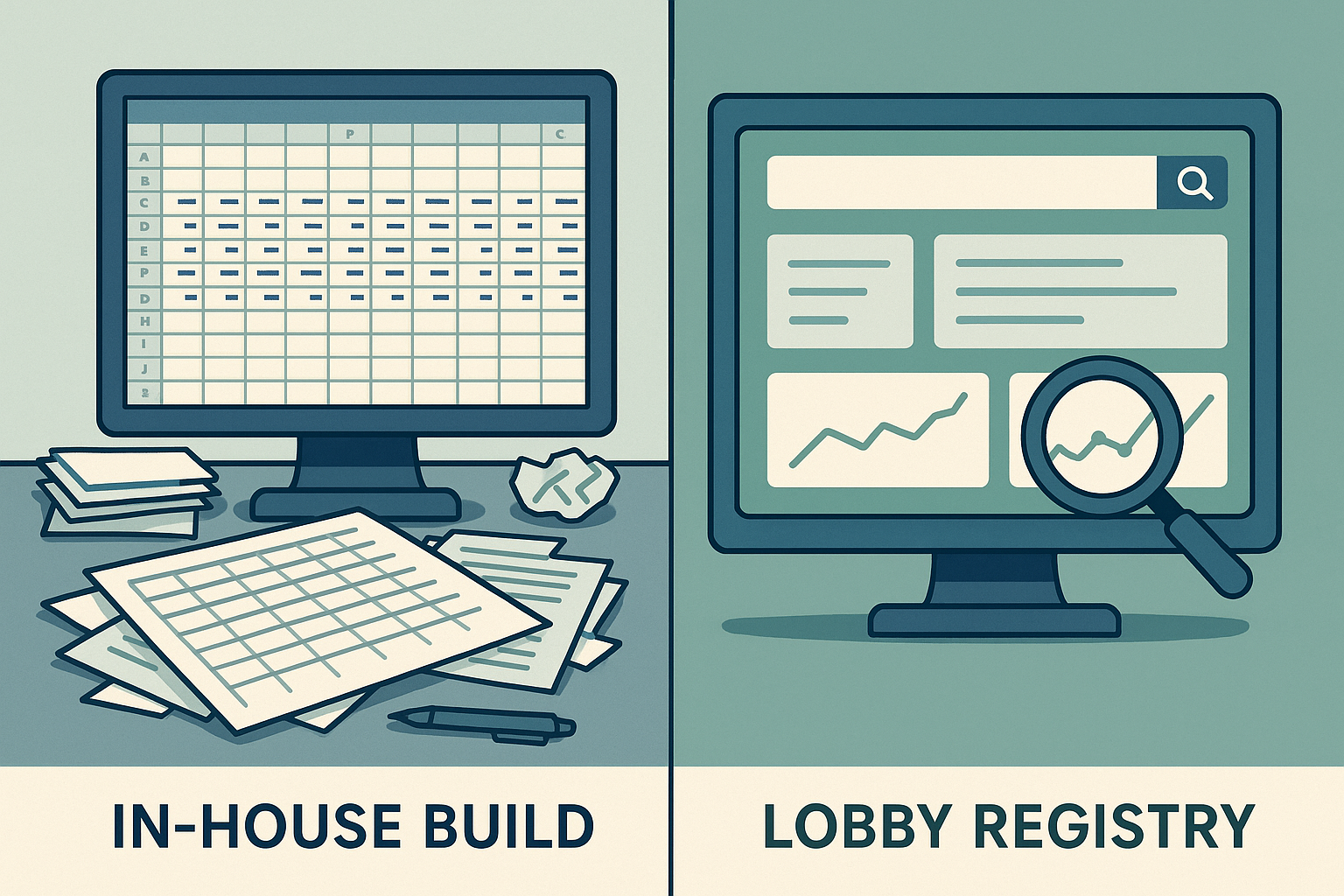
The legal path is clear. The other question worth answering up front is cost. Municipalities that scope a registry build internally often land on six-figure estimates once a technology partner is hired to design, build, host, and maintain it. This is the same conclusion most municipalities reach once they’ve costed out a custom build.
A turn-key platform changes that math. When evaluating any option, a clerk’s office should look for:
- Flat annual pricing tiered by population, so there’s no custom quote to route through a full procurement cycle
- Canadian data residency, so there’s no separate data-sovereignty review
- White-labelling with no IT lift. It carries your branding and links from your existing website
- Administration that fits inside existing roles. The clerk’s office, or an hourly Integrity Commissioner, can handle validation without adding a staffing line
Lobby Registry is a platform built on exactly this model, already in use by Canadian municipalities. Once a municipality has completed its own internal review and sign-off, onboarding is fast. There’s no custom build to wait on.
A Voluntary Lobbyist Registry Doesn’t Mean Toothless
A municipality doesn’t need provincial legislation to make a lobbyist registry meaningful. The tools already exist: a Code of Conduct amendment that ties access to registration, and a platform that makes registration itself simple and fast to stand up.
Curious how this would work for your municipality? Reach out at lobbyregistry.ca and we can walk through how the bylaw language and the platform would fit your specific situation. No commitment, just a conversation to bring back to your own review.
This article is general information for municipal staff and councillors considering lobbyist registry options. It is not legal advice. Any bylaw or Code of Conduct language should be reviewed by municipal legal counsel to confirm it fits your municipality’s specific governance structure and enabling legislation.
All Articles






 FR
FR  EN
EN